

Independent Contractor Contract Templates in 2026
Independent contractor contract templates are a popular starting point for companies hiring remote talent. They help teams move faster by standardizing key terms, setting expectations early, and simplifying the onboarding process. When working with multiple contractors or distributed teams, templates also bring consistency, making it easier to manage agreements without starting from scratch each time.
At the same time, templates are most effective when they’re treated as practical tools rather than complete solutions. While they usually cover essentials like scope of work, payment terms, and basic protections, they don’t capture how a working relationship actually functions day to day. How work is assigned, communicated, and managed matters just as much as what’s written in the contract.
In an increasingly remote-first environment, contractor relationships often evolve over time. Projects can expand, roles may shift, and teams may grow across borders. Contract templates help provide a clear foundation, but they work best when paired with clear processes and an understanding of how contractors fit into the broader team structure.
Let’s dive into a straightforward, real-world look at how employers use independent contractor contract templates in 2026. I’ll explain what these templates typically include, where they add the most value, and how companies use them in practice when building modern remote teams.
Key Takeaways:
- Independent contractor contract templates help standardise agreements but do not determine legal worker status on their own.
- Regulators assess how a contractor relationship operates in practice rather than relying on contractual labels.
- Most contract templates include scope of work, payment terms, confidentiality, IP ownership, and contract duration.
- Contract templates are most effective when paired with clear working practices and consistent contractor management processes.
- Templates do not govern day to day control, integration, or economic dependence, which are key misclassification risk factors.
What Is an Independent Contractor Contract Template?
An independent contractor contract template is a standardized agreement that companies use as a starting point when working with contractors. Rather than drafting a new contract for every engagement, employers use templates to outline common terms that apply across most contractor relationships. These documents are typically adapted to fit the specific scope, project, or role, but the core structure remains consistent.
Contract templates are especially common in remote and distributed teams, where companies may be working with multiple contractors at the same time. By using a consistent framework, employers can reduce friction during onboarding and create clearer expectations from the outset.
Why Templates Exist
One of the main reasons contract templates exist is to create consistency across contractor engagements. When each contractor agreement follows a similar structure, it becomes easier for companies to manage relationships, track obligations, and avoid confusion. Consistent contracts also help contractors understand what to expect, even when working with different teams or projects within the same organization.
Templates also support faster setup for new engagements. Instead of negotiating every clause from scratch, employers can focus on the details that matter most, such as scope, timelines, and compensation. This can be especially helpful for fast-moving teams or businesses that regularly bring on contractors for short-term or project-based work.
What Templates Are Designed to Do
At their core, independent contractor contract templates are designed to set expectations. They typically describe the nature of the work, how deliverables are defined, and how payment is handled. By putting these details in writing, both parties have a shared reference point that reduces misunderstandings later on.
Templates also serve to document the business relationship. They clarify that the engagement is project-based or service-based rather than employment, and they outline practical terms such as invoicing, confidentiality, and contract duration. This documentation helps create transparency and provides a clear record of agreed terms.
While templates play an important role in structuring contractor engagements, they are best viewed as a foundation. They support clear communication and efficient onboarding, but they work most effectively when paired with well-defined working practices and ongoing alignment between the company and the contractor.
What Contractor Contract Templates Usually Include
Independent contractor contract templates are designed to cover the core terms that apply to most contractor relationships. While the exact language may vary by company or engagement, templates generally include a set of standard sections that help define how the relationship works in practice. These sections create clarity for both parties and reduce uncertainty once work begins.
Scope of Work and Deliverables
The scope of work section outlines what the contractor is being engaged to do. This is often written in project-based terms, focusing on specific services, deliverables, or outcomes rather than ongoing duties. Clear descriptions help ensure both parties understand what is included in the engagement and what falls outside its scope.
Defined responsibilities are an important part of this section. The contract may describe the contractor’s role, expected deliverables, and any deadlines or milestones tied to the work. Keeping this section clear and specific can help prevent misunderstandings later, especially when projects evolve or priorities shift.
Payment Terms and Invoicing
Payment terms explain how and when the contractor will be paid. This typically includes the agreed fee structure, whether payment is hourly, per project, or based on milestones. Contracts often outline invoicing requirements, such as how invoices should be submitted and any supporting information that may be needed.
Timelines are also commonly addressed, including payment schedules and processing periods. By clearly documenting fees, timing, and payment methods, this section helps set expectations and supports smoother financial workflows for both the company and the contractor.
Confidentiality and IP
Confidentiality and intellectual property clauses are used to protect company information shared during the engagement. These sections often address how sensitive information should be handled and what happens to work created as part of the contract.
Intellectual property terms typically clarify ownership of deliverables once they are completed and paid for. Clear language here helps avoid confusion over who owns the work product and how it can be used after the engagement ends.
Contract Length and End Terms
Most contractor contract templates include clear start and end points. This may be a defined project duration or a term that can be ended with notice. Ending terms often describe how either party can conclude the agreement and what obligations remain after termination.
Having defined timeframes and end terms helps reinforce the project-based nature of contractor work and provides structure around how the relationship begins and ends.
Together, these sections form the foundation of most independent contractor contract templates, supporting clear expectations and smoother working relationships.
Where Templates Help (and Where They Don’t)
Independent contractor contract templates play an important role in setting up working relationships, but they are only one piece of the overall picture. Understanding what templates are good at, and what they are not designed to handle, can help employers use them more effectively and avoid misplaced expectations.
Templates are strongest when they are used to document agreed terms in a clear, consistent way. They provide a written reference point that both parties can return to if questions come up. At the same time, templates are not meant to manage the day-to-day realities of how work is performed or how relationships evolve over time. Those elements depend on communication, processes, and how teams operate in practice.

Templates help establish a solid foundation by clearly documenting the business arrangement. They reduce uncertainty at the start of an engagement and make it easier to manage multiple contractor relationships at once. For employers working with remote teams, this consistency can be especially valuable.
However, templates are not designed to define how work happens on a daily basis. They do not replace clear communication, project planning, or ongoing alignment. As contractor relationships grow or change, employers often rely on processes and tools outside the contract to manage work effectively.
Used thoughtfully, contract templates support clarity and efficiency. They work best when paired with strong working practices that address the realities of collaboration beyond the written agreement.
Using Contract Templates in Real Hiring Scenarios
Independent contractor contract templates are used in different ways depending on how a company works with contractors. While the core structure of a template may stay the same, how it is applied often varies based on the type of engagement, the length of the relationship, and where contractors are located. Looking at common hiring scenarios helps illustrate how templates fit into real-world use.
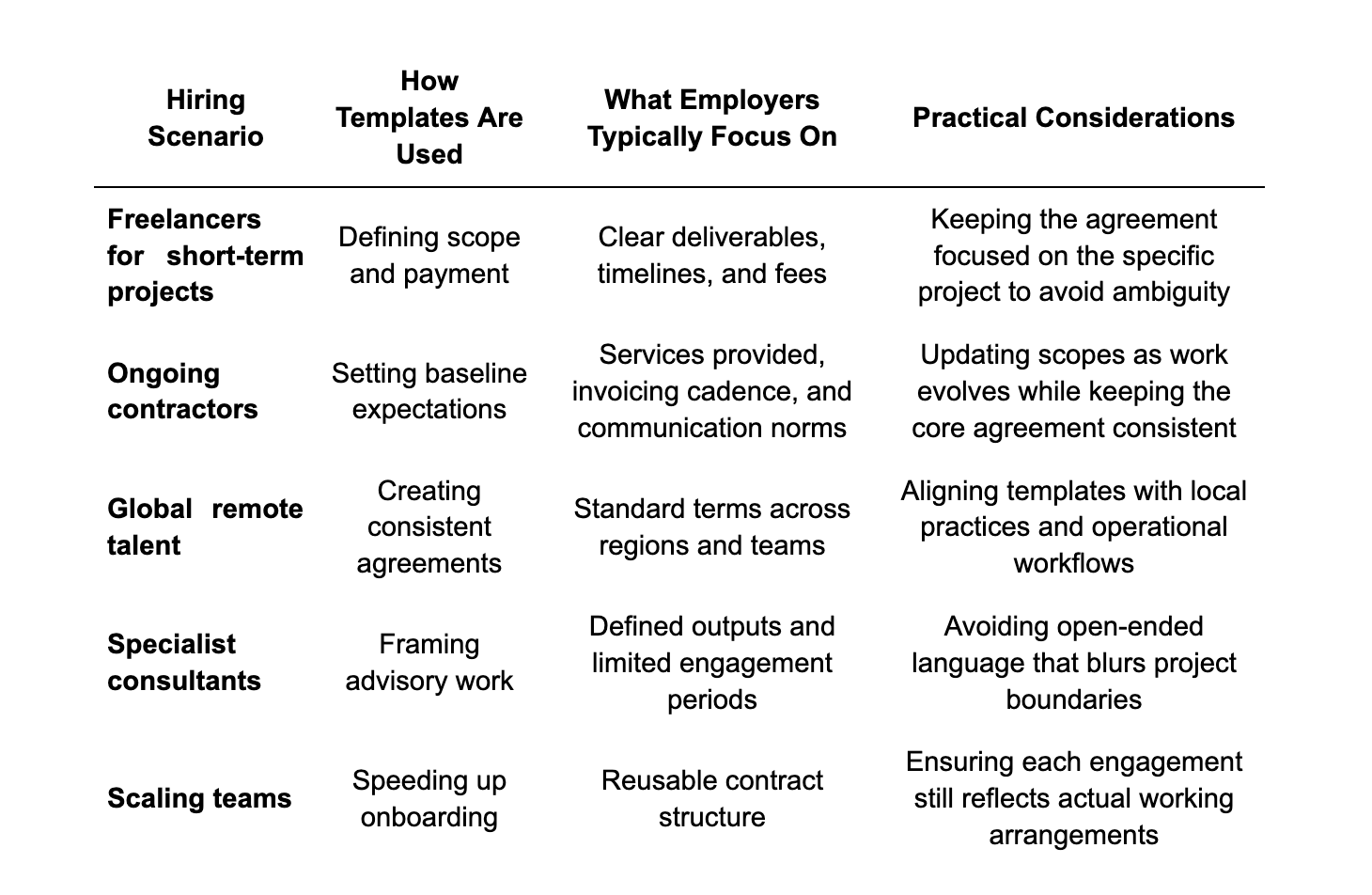
In project-based hiring, templates are often used to clearly define what work is being delivered and how payment is handled. This clarity helps both sides stay aligned and reduces the risk of scope creep. For longer-term contractor relationships, templates provide a baseline agreement that can support ongoing work while allowing individual projects or scopes to be updated as needed.
When hiring global remote talent, templates are especially useful for maintaining consistency across teams. Employers can use a standardized agreement to ensure key terms are covered, even when contractors are based in different locations.
Across all scenarios, contract templates work best when they reflect how the relationship operates in practice. They are most effective when used as flexible frameworks that support real hiring needs rather than rigid documents applied without context.
Next Steps for Employers Hiring Contractors
Independent contractor contract templates work best when they are part of a wider, well-defined approach to managing contractor relationships. As this guide has shown, templates provide structure and consistency, but they do not account for how work is scoped, managed, or evolves over time. Reviewing how contractors are engaged in practice helps ensure that agreements remain clear, relevant, and aligned with day to day operations as teams grow and change.
I help organisations review contractor arrangements beyond the contract itself, focusing on how roles operate in reality and where risk or ambiguity may exist. By assessing current practices and how templates are applied across different engagement types, I provide practical guidance to support compliant, scalable contractor models. Get in touch to review your contractor setup and ensure your agreements reflect how your team actually works.




.jpg)